
If you’re considering SumUp for your business, one of the first questions you’ll probably ask is simple: how much does SumUp actually cost?
The good news is that SumUp has one of the simplest pricing structures available to UK businesses. Unlike many traditional card payment service providers, there are no long-term contracts, no terminal rental agreements and no mandatory monthly fees on the standard plan.
However, there are still several costs to understand before signing up, including transaction fees, card reader costs, optional subscription plans and additional business tools.
In this guide, we’ll explain exactly what SumUp fees UK businesses can expect, how the pricing works and how much you might pay each month based on your sales volume.
If you’re still comparing providers, you may also find our guides to Best Card Payment Machines UK, Square vs SumUp UK, SumUp vs Zettle UK, Cheapest Card Readers UK, Card Machine Fees Explained, Square Fees UK, Zettle Fees UK and Dojo Fees UK helpful.
At a Glance
✓ No monthly fee on standard plan
✓ Card readers from £25 ex VAT
✓ Standard transaction fee: 1.69%
✓ Payments Plus available from £19/month
✓ Best suited to small businesses and sole traders
Disclosure: Some links on this page are affiliate links. If you choose to purchase through them, we may earn a commission at no additional cost to you. Our comparisons and recommendations are based on independent research and editorial judgement.
SumUp Fees at a Glance
The table below summarises the main SumUp Fees UK businesses should be aware of.
📱 Viewing on mobile? Swipe left and right to see the full table.
| Product / Fee | Cost |
|---|---|
| Standard Pay As You Go | £0/month |
| Payments Plus | £19/month |
| Standard in-person fee | 1.69% |
| Payments Plus in-person fee | 0.99% (eligible domestic debit & credit cards) |
| Online payment fee | 2.50% |
| Tap to Pay | No hardware cost |
| Solo Lite | £25 (ex VAT) |
| Solo Lite + Charging Station | £35 (ex VAT) |
| Solo | £79 (ex VAT) |
| Solo + Printer | £109 (ex VAT) |
| Terminal | £135 (ex VAT) |
What Are SumUp Fees?
Understanding SumUp Fees UK businesses may encounter is relatively straightforward thanks to the provider’s simple pricing model.
Rather than paying a fixed monthly fee, most businesses simply pay a percentage of each card payment they process.
This approach makes SumUp particularly attractive to:
- Sole traders
- Start-ups
- Mobile businesses
- Market traders
- Small retailers
- Seasonal businesses
Because there are no minimum usage requirements, businesses only pay when they take card payments.
For many small businesses, this means there are effectively no ongoing fixed costs beyond the initial purchase of a card reader.
SumUp Transaction Fees
Transaction fees are the main ongoing cost of using SumUp.
Every time a customer pays by card, SumUp deducts a small percentage before transferring the remaining funds to your account.
Standard Pay-As-You-Go Pricing
The standard in-person transaction fee is currently:
1.69% per transaction
No monthly fee,
No contract
No minimum usage
This applies to most card payments accepted through SumUp card readers, including:
- Contactless payments
- Chip and PIN transactions
- Apple Pay
- Google Pay
- Visa cards
- Mastercard cards
One of the reasons SumUp is popular with small businesses is the simplicity of this pricing model.
Unlike some providers, there are no complicated tiered rates, minimum monthly charges or separate merchant account fees.
Pay-As-You-Go Pricing – Example Transaction Costs
📱 Viewing on mobile? Swipe left and right to see the full table.
| Sale Amount | Fee |
|---|---|
| £10 | £0.17 |
| £25 | £0.42 |
| £50 | £0.85 |
| £100 | £1.69 |
| £500 | £8.45 |
For businesses processing relatively low volumes, this transparency makes budgeting straightforward.
Payments Plus Reduced Rate
Businesses processing larger card volumes may benefit from SumUp’s Payments Plus plan.
For a monthly subscription fee, eligible in-person card payments can be processed at:
0.99% per transaction (for in-person payments with standard consumer cards)
This can produce significant savings for businesses taking thousands of pounds in card payments every month.
The higher your card turnover, the more attractive the lower transaction rate may become. You can learn more about Payments Plus in the Subscription Plans section below.
How SumUp Fees Affect Your Profit Margins
Many business owners focus on the headline transaction fee, but it is equally important to understand how payment processing costs affect profitability.
For example, if you sell a product for £100 and your gross profit margin is 30%, you earn £30 before payment processing costs.
A 1.69% card processing fee would reduce your profit by £1.69, leaving £28.31.
While this may not seem significant on a single sale, the impact becomes more noticeable as transaction volumes increase.
For example:
📱 Viewing on mobile? Swipe left and right to see the full table.
| Monthly Card Sales | Estimated Fees at 1.69% |
|---|---|
| £1,000 | £16.90 |
| £5,000 | £84.50 |
| £10,000 | £169.00 |
| £20,000 | £338.00 |
Businesses processing larger volumes should periodically review their payment costs to ensure they remain competitive.
💡 Key Takeaway
While payment processing fees reduce profit margins, refusing card payments can also cost sales. Many customers now expect to pay by card, particularly for higher-value purchases, so the additional revenue generated by accepting card payments often outweighs the transaction costs.
SumUp Hardware Costs
SumUp offers several ways for UK businesses to accept card payments, ranging from Tap to Pay on a smartphone through to dedicated card terminals. Unlike many traditional providers, hardware is purchased outright rather than rented monthly, helping businesses keep ongoing costs predictable.
Current SumUp Hardware Prices
📱 Viewing on mobile? Swipe left and right to see the full table.
| Product | Upfront Cost (ex VAT) | Best For |
|---|---|---|
| Tap to Pay | £0 hardware cost | Businesses with a compatible smartphone |
| Solo Lite | £25 | Sole traders and occasional sellers and mobile businesses |
| Solo Lite + Charging Station | £35 | Businesses wanting a dedicated charging dock |
| Solo | £79 | Small businesses wanting a standalone card machine |
| Solo + Printer | £109 ex VAT | Businesses requiring printed receipts |
| Terminal | £135 | Retail and hospitality businesses |
Pricing correct at the time of writing. SumUp may change fees, products or promotions over time.
Want to see the latest card readers and hardware?
View readers →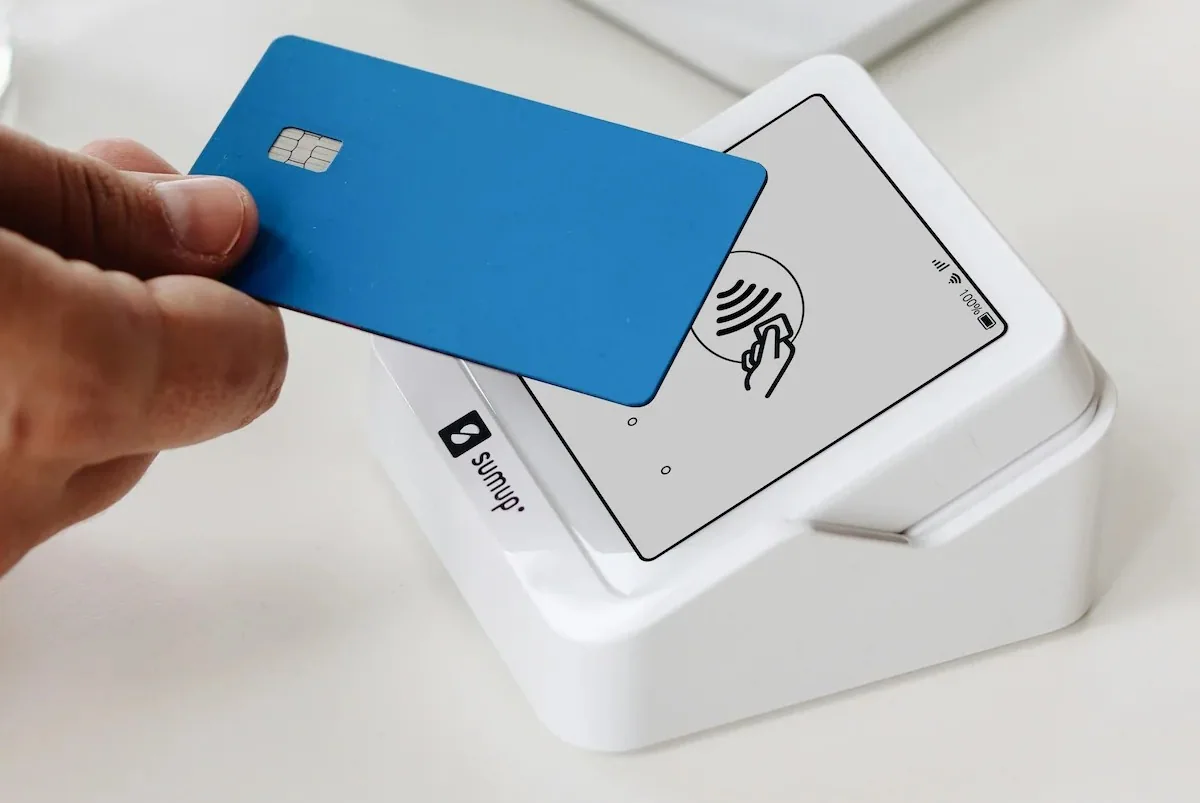
Tap to Pay
Tap to Pay allows compatible smartphones to accept contactless card payments without a separate card reader. For businesses just getting started, this can be the lowest-cost way to begin accepting card payments because there is no additional hardware to purchase.
SumUp Solo Lite
The SumUp Solo Lite is SumUp’s entry-level card reader and is designed for businesses that want a simple, low-cost way to accept card payments.
Unlike the Solo, the Solo Lite works alongside your smartphone using the SumUp app. This helps keep costs down while still allowing businesses to accept contactless, chip and PIN, Apple Pay and Google Pay payments.
It is particularly well suited to sole traders, market traders and mobile businesses that only need occasional or moderate card payment acceptance.
The Solo Lite is also available with an optional Charging Station, which provides a dedicated dock for charging and storing the device between transactions.
SumUp Solo
The SumUp Solo is a standalone card machine with its own touchscreen display and built-in connectivity, allowing it to operate independently without relying on a smartphone. A charging station is included as standard, providing a dedicated place to charge and store the device between transactions.
The main advantage of Solo is convenience. Because everything is handled directly through the device, transactions can be processed more quickly and with fewer steps. Many businesses also prefer having a dedicated payment terminal rather than using a personal phone during transactions.
For businesses that regularly take card payments, the additional convenience and professional appearance may justify the higher upfront cost.
SumUp Solo + Printer
The SumUp Solo + Printer combines the standalone Solo card machine with an integrated receipt printer.
This setup is designed for businesses that regularly issue printed receipts and want a more complete payment solution. Because the Solo operates independently of a smartphone, transactions can be processed directly through the device, while the printer provides customers with a physical receipt when required.
The Solo + Printer is particularly suited to retail, hospitality and other customer-facing businesses where printed receipts are still commonly requested.
SumUp Terminal
The SumUp Terminal is designed for businesses processing higher volumes of card payments and those requiring a more advanced all-in-one payment solution. It is commonly used in retail and hospitality environments.
SumUp Subscription Plans
One of SumUp’s biggest advantages is flexibility.
Businesses can choose between a completely pay-as-you-go approach or a subscription plan designed to reduce transaction costs.
Standard Plan
The standard plan includes:
- No monthly fee
- No contract
- No minimum usage
- 1.69% transaction fee
This is ideal for businesses with:
- Irregular sales volumes
- Seasonal trading
- Lower monthly turnover
- Limited card transactions
Payments Plus
Payments Plus costs:
£19 per month
In return, eligible businesses receive:
- Reduced transaction fees
- Additional account benefits
- Potential cost savings at higher processing volumes
For businesses processing substantial card turnover each month, the subscription can often pay for itself through lower transaction costs alone.
📱 Viewing on mobile? Swipe left and right to see the full table.
| Standard | Payments Plus | |
|---|---|---|
| Monthly fee | £0 | £19 |
| Eligible domestic debit & credit cards | 1.69% | 0.99% |
| Contract | No | No |
When Does Payments Plus Become Worthwhile?
Payments Plus reduces eligible in-person transaction fees from 1.69% to 0.99% in exchange for a monthly subscription fee of £19.
Whether it represents good value depends largely on how much card revenue your business processes each month.
Based on the current pricing structure, Payments Plus typically starts to become worthwhile at around £3,000–£3,500 per month in eligible card transactions.
This aligns broadly with SumUp’s own guidance that Payments Plus is designed for businesses processing several thousand pounds of card payments each month.
The exact break-even point will vary depending on the mix of cards your customers use, as the reduced rate only applies to eligible domestic debit and credit card transactions.
As a simple example:
📱 Viewing on mobile? Swipe left and right to see the full table.
| Monthly Card Sales | Fee Saving Before Subscription Cost |
|---|---|
| £1,000 | £7 |
| £2,000 | £14 |
| £3,000 | £21 |
| £5,000 | £35 |
| £10,000 | £70 |
At around £3,000 per month in eligible card payments, the lower transaction fee begins to offset the £19 monthly subscription cost.
At lower transaction volumes, the standard pay-as-you-go plan is often the better option.
However, businesses processing several thousand pounds of card payments each month may benefit from Payments Plus because it reduces fees on eligible domestic debit and credit card transactions from 1.69% to 0.99%.
Because business circumstances vary, it is worth calculating your expected card turnover before choosing a plan.
Online Payment Fees
SumUp is not limited to in-person card payments. Businesses can also accept payments online using a range of tools, including Payment Links, Online Invoices, QR Code Payments and Online Store payments.
These options can be useful for businesses that sell remotely, take deposits in advance or invoice customers after completing work. For example, a tradesperson could send a payment link by text message, while an online retailer could accept payments through a SumUp Online Store.
At the time of writing, online payments are charged at 2.50%, regardless of whether you are using the standard Pay As You Go plan or the Payments Plus plan.
Online payment fees are typically higher than in-person card transaction fees because online transactions involve different processing requirements and levels of risk compared with card-present payments.
Businesses that regularly accept payments online should factor these costs into their calculations when comparing providers and estimating overall payment processing expenses.
Additional Costs
Most businesses will only pay for hardware and transaction fees.
However, there are some optional extras worth understanding.
Point of Sale Systems
SumUp also offers point-of-sale (POS) systems designed for retail shops, cafés and hospitality businesses.
These solutions combine card payments with features such as:
- Product catalogues
- Inventory tracking
- Sales reporting
- Staff management
POS systems typically involve additional hardware and may include separate software subscription costs depending on the package chosen.
Businesses that simply need to accept card payments will often find a standard card reader sufficient. However, retailers, cafés and other businesses that require inventory management, staff controls or advanced reporting may benefit from a dedicated POS system.
📱 Viewing on mobile? Swipe left and right to see the full table.
| Optional Software Plans | Monthly Cost |
|---|---|
| Standard Pay As You Go | £0 |
| Payments Plus | £19 |
| POS Plus | £29 |
💡 Who is POS Plus for?
POS Plus is designed for businesses that require advanced retail or hospitality functionality. Most sole traders, market traders and mobile businesses will only need the standard Pay As You Go or Payments Plus plans.
Looking for advanced retail or hospitality features?
Explore POS →Business Account and Card
In addition to payment processing services, SumUp also offers a business account and business card for UK businesses. These banking-style features can help businesses manage payments, spending and cash flow within the wider SumUp ecosystem, although they are entirely optional and not required to accept card payments.
Accessories
Optional accessories include:
- Receipt printers
- Charging docks
- Barcode scanners
- Cash drawers
These are not essential for most businesses but can increase total setup costs.
Potential Additional Charges to Be Aware Of
One of SumUp’s strengths is its relatively simple and transparent pricing structure. However, businesses should still understand the wider costs that can be associated with accepting card payments.
For example, some businesses choose to purchase additional hardware such as receipt printers, charging stations or other accessories to support their payment setup. While these costs are optional, they can increase the overall investment required.
Businesses that require more advanced point-of-sale functionality may also choose to subscribe to additional software services, depending on their operational needs.
Reduced Transaction Fees May Not Apply to Every Card Type
Businesses considering the Payments Plus subscription should be aware that the reduced transaction rate currently applies to eligible domestic debit and credit card transactions.
Other card types, including premium cards, American Express cards and international cards, may continue to be charged at the standard transaction rate. As a result, the actual savings achieved through Payments Plus will depend on the mix of cards used by your customers.
Businesses that primarily serve UK consumers paying with standard debit and credit cards are generally most likely to benefit from the reduced fees.
Chargebacks
Although relatively uncommon for most small businesses, chargebacks can occur when a customer disputes a transaction through their card issuer.
While chargebacks are a normal part of accepting card payments, they can result in additional administration and may temporarily affect access to funds while a dispute is investigated.
Understanding these potential costs and considerations can help businesses budget more accurately and avoid unexpected surprises as they grow.
Monthly Costs
The answer depends entirely on your sales volume. Businesses taking less than around £3,000 per month in eligible card payments will often find the standard Pay As You Go plan offers the best value.
However, once monthly card sales move beyond this level, Payments Plus may reduce overall costs thanks to its lower transaction fee on eligible domestic debit and credit card payments.
For many businesses, monthly costs are simply:
Monthly Card Sales × Transaction Fee
Below are some examples.
Low-Volume Trader
Monthly Card Sales
£1,000
Estimated Monthly Fees
£16.90
Typical examples:
• Market traders
• Hobby businesses
• Occasional sellers
Best option: Standard pay-as-you-go plan
Small Retail Shop
Monthly Card Sales
£5,000
Estimated Monthly Fees
£84.50
Typical examples:
• Independent retailers
• Cafés
• Beauty businesses
Worth considering: Payments Plus
Growing Business
Monthly Card Sales
£10,000
Estimated Monthly Fees
£169.00
Typical examples:
• Busy retail shops
• Hospitality businesses
• Established service businesses
Review: Compare Standard vs Payments Plus
Who Is SumUp For?
One of the reasons SumUp has become popular among UK small businesses is its flexible pricing structure. With no long-term contracts and no mandatory monthly fees on the standard plan, it can suit a wide range of business types.
Sole Traders
SumUp is particularly popular with sole traders because there are no monthly commitments on the standard pay-as-you-go plan. Businesses can start accepting card payments without signing lengthy contracts or paying ongoing terminal rental fees.
The availability of Tap to Pay and low-cost card readers can also help keep startup costs to a minimum.
Market Traders
For market traders and event sellers, the ability to purchase a card reader outright and pay only when transactions are processed can be attractive.
Because sales volumes can vary significantly throughout the year, many market traders appreciate the flexibility of a pay-as-you-go pricing model with no fixed monthly costs.
Retail Shops
Retail businesses often value SumUp’s straightforward pricing and range of hardware options.
Smaller retailers may find a standard card reader sufficient, while businesses requiring additional functionality may prefer solutions such as Terminal or SumUp’s POS systems.
As transaction volumes increase, it can also be worth comparing the standard plan with Payments Plus to determine which offers the best value.
Tradespeople
Electricians, plumbers, decorators, gardeners and other mobile service businesses often use SumUp to accept payments on-site.
Being able to take card payments immediately can improve cash flow, reduce the need to chase invoices and provide customers with more convenient payment options.
Tap to Pay can be particularly useful for tradespeople who want to start accepting card payments without purchasing additional hardware.
Growing Businesses
Businesses processing larger volumes of card payments should review transaction costs regularly.
While SumUp remains competitive for many businesses, those processing significant monthly turnover may benefit from comparing different pricing plans or exploring whether reduced transaction fees could lower overall costs.
For many growing businesses, the combination of simple pricing, flexible hardware options and no long-term contracts continues to make SumUp an attractive choice.
Provider Comparison
When comparing card payment providers, it is important to look beyond the headline transaction fee.
Why Choose SumUp?
SumUp is designed for small businesses that want a straightforward way to accept card payments without lengthy contracts or complex pricing structures.
Key advantages:
- No contracts
- No monthly fee on the standard plan
- Simple, transparent pricing
- Low upfront hardware costs
- Quick and easy setup
Best suited to:
- Sole traders
- Start-ups
- Mobile businesses
- Small retailers
Square
Square is SumUp’s closest competitor in the UK market and offers a very similar pay-as-you-go approach.
Compared with SumUp, Square offers:
- Contract-free pricing
- Modern card readers
- Business management tools
- Online payment options
- POS solutions for growing businesses
For many small businesses, the choice between Square and SumUp comes down to features, hardware preferences and overall costs.
You can read our full comparison in Square vs SumUp UK.
You can also read our complete Square Fees UK guide.
Traditional Merchant Accounts
Traditional card payment providers (e.g. Worldpay, Barclaycard Payments, Lloyds Cardnet and Elavon) can sometimes offer lower transaction rates, particularly for businesses processing large volumes.
However, these providers often involve:
- Monthly fees
- Longer contracts
- More complex pricing structures
- Setup requirements
- Additional compliance administration
For many small businesses, SumUp’s simplicity outweighs these potential savings.
Businesses processing very high volumes of card payments may also be able to negotiate bespoke pricing directly with SumUp. In these cases, it can be worth comparing custom pricing options with traditional card payment providers.
Another alternative worth considering is Zettle (PayPal Point of Sale). Zettle charges a flat 1.75% transaction fee and is particularly attractive to businesses that already use PayPal. While SumUp’s standard fee is slightly lower at 1.69%, the difference is relatively small for many businesses. Read our Zettle Fees UK guide for a full breakdown of pricing and costs.
Businesses processing higher card volumes may also want to compare Dojo, which offers bespoke pricing and integrated business tools. Read our Dojo Fees UK guide.
Is SumUp Good Value?
For many UK businesses, yes.
SumUp has built its reputation around simplicity, transparency and flexibility.
Overall, the SumUp fees UK businesses pay remain competitive for small and growing companies that value simplicity and flexibility. Rather than locking businesses into lengthy agreements, it allows merchants to start accepting card payments with relatively low upfront costs and no ongoing commitment.
This makes it particularly well suited to:
- Sole traders
- Start-ups
- Mobile businesses
- Market traders
- Small retailers
However, choosing a card payment provider is not always about achieving the lowest possible fee. Businesses that require advanced inventory management, reporting tools or industry-specific POS software may also wish to compare Square Fees UK, as Square offers a more extensive software ecosystem than SumUp.
For most small businesses, however, SumUp remains one of the easiest and most accessible ways to start accepting card payments.
Ready to explore SumUp?
SumUp offers a free plan with no monthly fees, flexible hardware options and powerful business software designed to grow with your business.
✓ No monthly fee on the standard plan
✓ Card readers from £25 + VAT
✓ Payments Plus available from £19/month
Frequently Asked Questions
Does SumUp charge a monthly fee?
The standard pay-as-you-go plan has no monthly fee. Optional subscription plans are available for businesses that want lower transaction rates and additional benefits.
What is the standard SumUp transaction fee?
The standard in-person card payment fee is currently 1.69% per transaction.
Do I need a contract to use SumUp?
No. SumUp is known for its contract-free pricing structure.
Are there setup fees?
There are generally no setup fees. Businesses simply purchase compatible hardware and start accepting payments.
Is SumUp cheaper than Square?
It depends on your transaction volume and business requirements. Both providers offer contract-free pricing, but fees, hardware costs and features vary between providers.
Can I use SumUp without paying monthly fees?
Yes. Many businesses use the standard pay-as-you-go plan without any monthly subscription.
Final Verdict
SumUp remains one of the most straightforward card payment solutions available to UK businesses.
With no long-term contracts, no mandatory monthly fees and transparent transaction pricing, it offers an attractive option for businesses that value simplicity and flexibility.
For sole traders, start-ups and small retailers, SumUp’s pricing structure is easy to understand and easy to budget for.
While larger businesses may eventually benefit from exploring alternative pricing models, SumUp continues to offer excellent value for the vast majority of small UK businesses looking to accept card payments.
Ready to Get Started?
If SumUp looks like the right fit for your business, you can check the latest pricing, compare card readers and create an account directly with SumUp.
View Pricing →Related Guides
Best Card Payment Machines UK
Ready to choose a provider? Compare the leading card payment machines for UK businesses.
Read Guide →Square vs SumUp UK?
Compare two of the UK’s most popular card payment providers side-by-side.
Read Guide →SumUp vs Zettle UK?
Compare two leading pay-as-you-go card payment providers and see which offers the best value for your business.
Read Guide →Cheapest Card Readers UK
Looking for the lowest-cost option? Compare affordable card readers and fees.
Read Guide →Card Machine Fees Explained
Understand transaction fees, monthly charges and the true cost of accepting card payments.
Read Guide →